Airbus and BioGlobal sign JSA to boost SAF development in Colombia
Bogotá, Colombia — [October 20, 2025] — Airbus and Bioglobal have signed a collaboration agreement through a Joint Study Agreement…



The company is advancing projects across its entire value chain, promoting best practices for environmental protection and the well-being of its employees.
The company’s strategy focuses on developing a zero-deforestation agribusiness, using water resources efficiently, and achieving carbon neutrality throughout its entire value chain by 2035—making BioD the first company in the sector to make this commitment. To accomplish this goal, it is implementing a series of initiatives that engage and benefit every member of what it calls its Symbiotic Business Circle: customers, suppliers, the environment, wildlife, communities, and the more than 8,300 employees who form part of its value chain. One of its major achievements has been maintaining its Great Place to Work certification for more than eight years.
Since the company was founded 15 years ago, BioD has been committed to using natural resources efficiently, particularly water. For this reason, it recirculates more than 90% of the wastewater generated by its processes and collects rainwater, ensuring the efficient use of this essential resource.
As part of its commitment to carbon neutrality, BioD is working with its supplier partners to harness the methane produced by covering effluent lagoons. This natural fuel is used to generate energy for production processes, providing a clear example of energy efficiency throughout the company’s value chain and helping reduce carbon dioxide emissions.
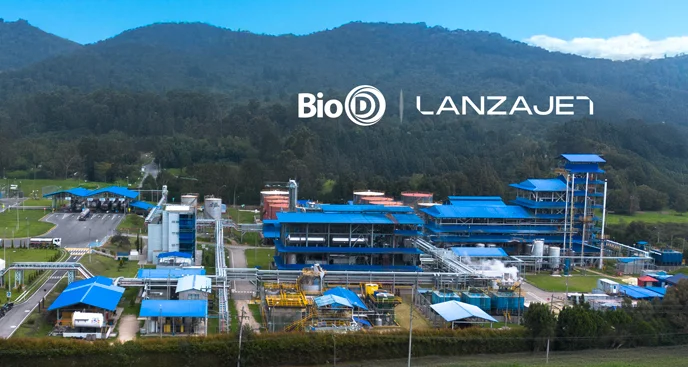
As part of its biodiversity protection efforts, the company developed an ecological corridor in Facatativá, where its biorefinery is located—more specifically, in the rural community of Mancilla. The project included the planting of more than 7,000 native species. In addition to this initiative, the company has also promoted entrepreneurship and ecotourism within the community.
The community is an essential part of BioD’s purpose because, “above all, everyone should benefit.”
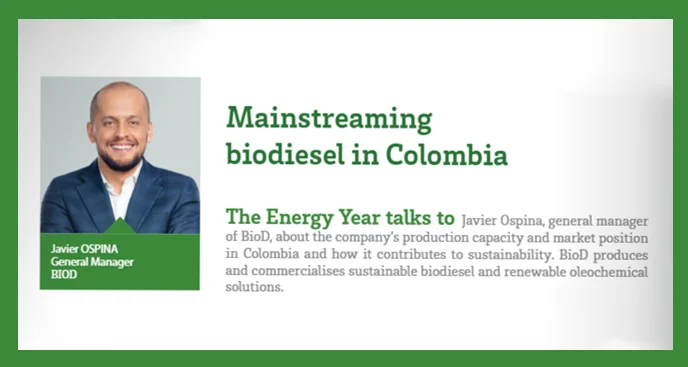
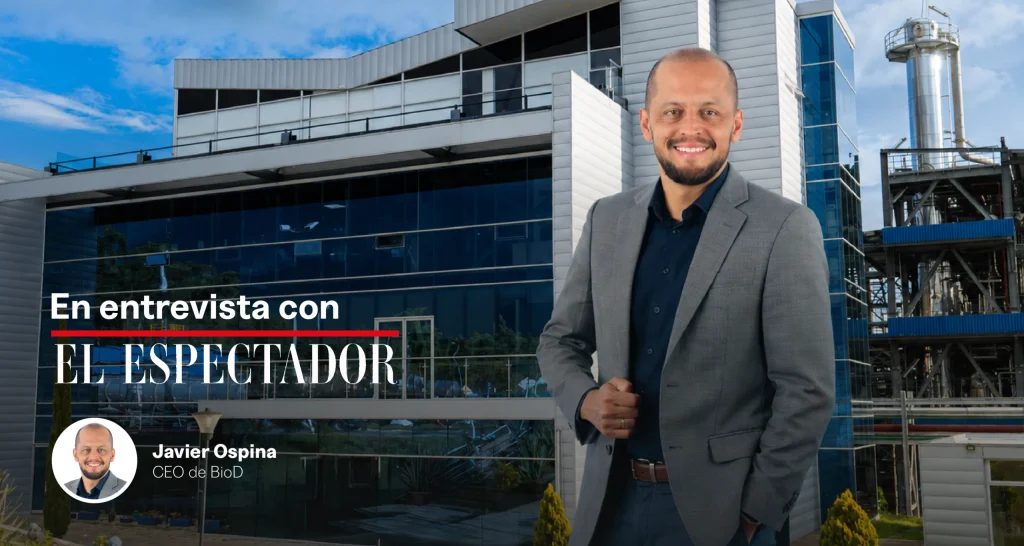
Javier Ospina, General Manager of BioD, states: “Our corporate commitment and purpose are to promote renewable solutions for a sustainable future. We remain consistent with this purpose by providing the market with a reliable and responsible business model. One of the projects we are advancing is the production of biodiesel from used cooking oil. For every liter of used cooking oil collected, we prevent 1,000 liters of water from being contaminated. By 2025, we will reduce our direct emissions by 30% as part of our commitment to achieving carbon neutrality by 2035.”
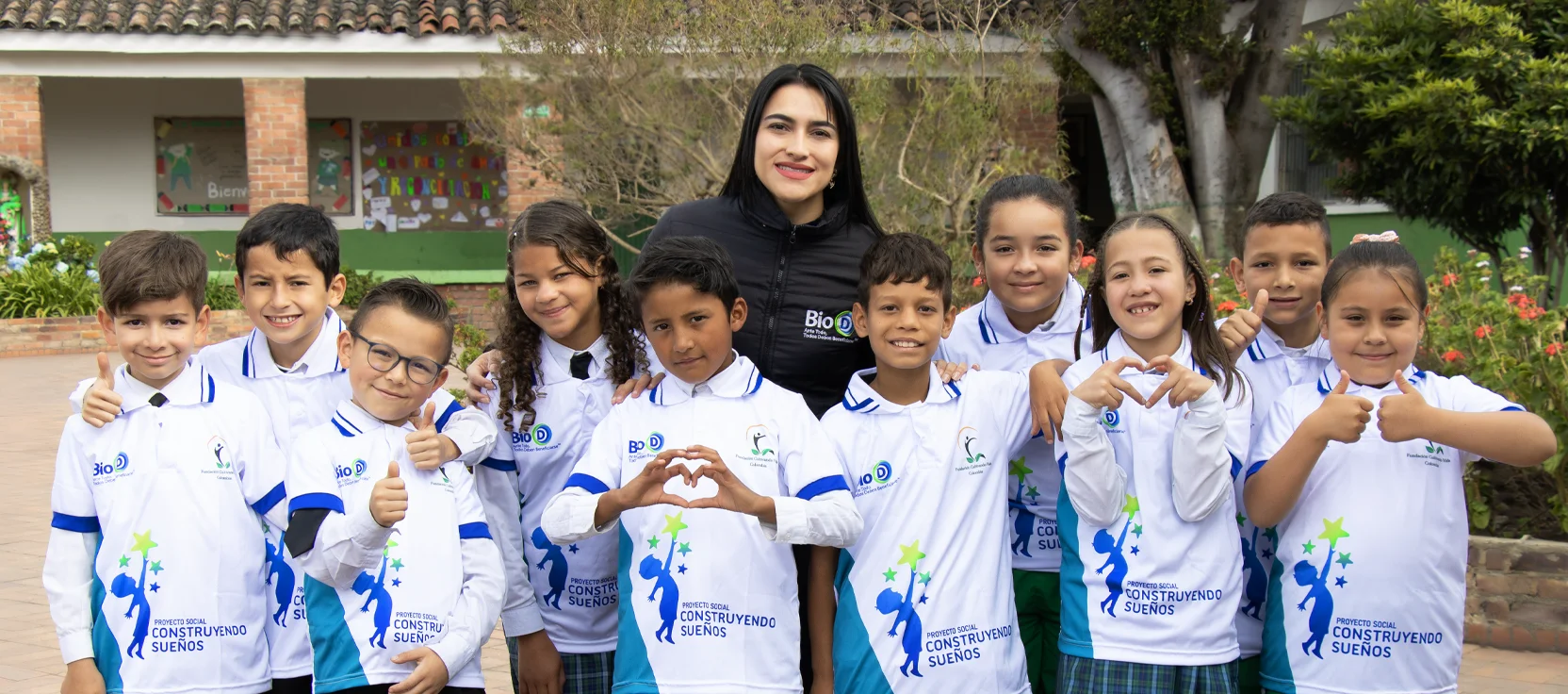
Communities are an essential part of BioD’s purpose. For this reason, the company develops a range of initiatives that benefit the people and communities surrounding its biorefinery in Facatativá.
One of these initiatives focuses on children, who represent Colombia’s future. Five years ago, the company created a program to develop soft skills among children, including emotional intelligence, critical thinking, leadership, and resilience. Through this program, BioD has positively impacted more than 1,300 children in its surrounding communities.
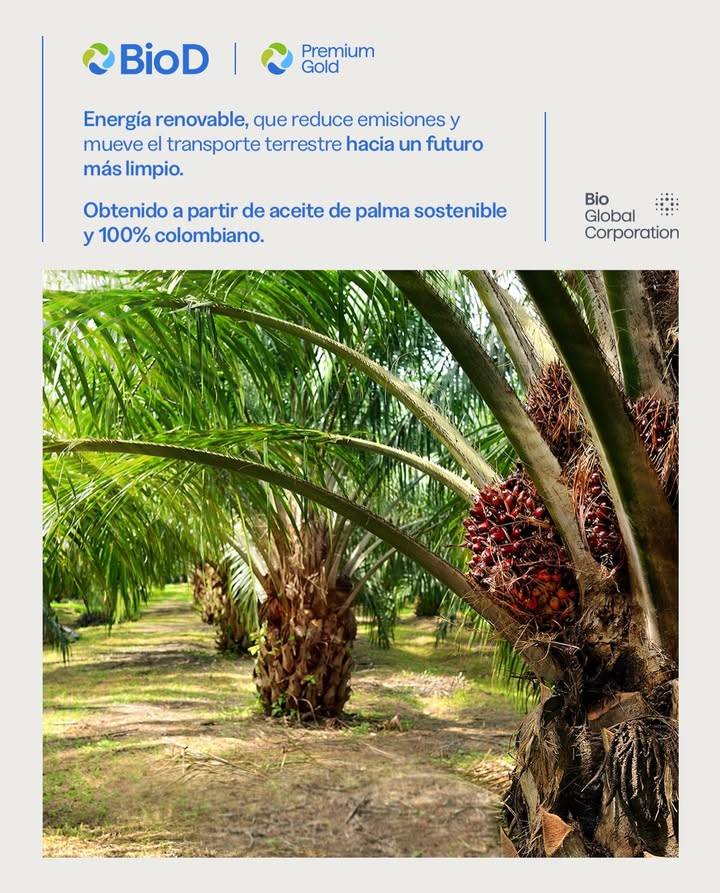
BioD supports the energy transition and the decarbonization of the planet through products and services that reduce greenhouse gas emissions. The company currently produces biodiesel, a renewable and clean fuel of natural origin that reduces CO₂ emissions by 91% compared with fossil fuels. In 2023, BioD helped prevent approximately 700,000 tonnes of CO₂ emissions—equivalent to removing all cars from Bogotá’s roads for 90 days.
One of the company’s most significant environmental initiatives is its participation, with the approval of Colombia’s Ministry of Mines and Energy, in the development of voluntary higher biofuel blends in Bogotá and Medellín, the country’s two most polluted cities.
Ospina explains that biodiesel is currently blended with conventional diesel at a regulated rate of 10% nationwide, while voluntary blends contain 20% biodiesel. This blend can reduce airborne particulate matter by between 30% and 70%, helping prevent respiratory illnesses, particularly among children and older adults. One of the company’s long-term challenges is to diversify its product portfolio, which is why it is also focusing on the aviation and maritime transportation sectors.
“We are committed to innovation and aim to expand our reach by contributing to the development of renewable solutions—not only for land-based fuels, but also for aviation through sustainable aviation fuel (SAF) and for the maritime sector. We also seek to enter new markets with bio-based products made from raw materials that continue to support the development of Colombia’s agribusiness sector, generate more formal jobs, and contribute to environmental quality, allowing us to remain an example for our country’s industry,” emphasized BioD’s General Manager.



Fill in the form and you will be contacted soon by one of our advisors to provide you with more information.