Airbus and BioGlobal sign JSA to boost SAF development in Colombia
Bogotá, Colombia — [October 20, 2025] — Airbus and Bioglobal have signed a collaboration agreement through a Joint Study Agreement…



Bogotá, D.C., February 2024. In 2023, the biofuels sector achieved a record reduction of 3.2 million tonnes of carbon dioxide (CO₂), an increase of 7% compared with 2022.
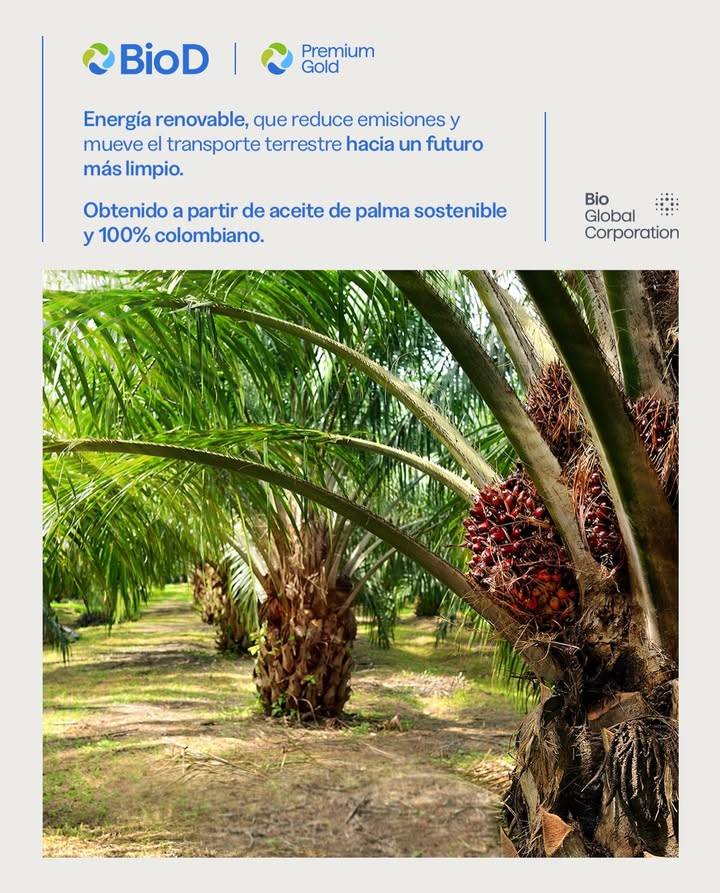
Biodiesel, produced from palm oil, and bioethanol, produced from sugarcane, generate 90,000 jobs while supporting an additional 470,000 positions. In 2023 alone, biofuels contributed 2.8% of Colombia’s manufacturing GDP. Furthermore, because of their chemical composition and cleaner-burning properties, these fuels also helped reduce particulate matter emissions by nearly 800 tonnes during the year.
Similarly, in 2023, the biofuels sector achieved record biodiesel sales of 700,000 tonnes, representing an increase of 2% compared with 2022. Domestic demand for blended diesel also grew by 1.4%, exceeding the country’s gross domestic product growth rate.
On the other hand, domestic bioethanol sales reached 81 million gallons, accounting for 56% of the market. Regular gasoline consumption declined by 2.6%, reaching 154,000 barrels per day, due to the proven price elasticity of demand.
“These figures reaffirm Colombians’ contribution to a more sustainable future through the use of biofuels as a liquid energy source for transportation. Biofuels are a key tool that can help Colombia address the challenge of decarbonizing its economy and reduce greenhouse gas emissions by 51% by 2030. Achieving this goal requires immediate action to ensure energy self-sufficiency and a gradual transition,” said Carolina Rojas, President of the National Federation of Biofuels, Fedebiocombustibles.
Initiatives such as the Biotanqueo Club, through which trucks, tractor-trailers, and dump trucks in Antioquia and Cundinamarca voluntarily use higher biofuel blends, now include more than 1,230 vehicles operating with B20. Together, they have prevented approximately 6,500 tonnes of greenhouse gas emissions, contributing to climate change mitigation.
On the other hand, several automotive brands have announced plans to introduce flex-fuel vehicles into Colombia—and some are already arriving. These vehicles can operate using gasoline blends containing up to 85% bioethanol, enabling an immediate reduction in greenhouse gas emissions while taking advantage of the country’s existing infrastructure.
For this reason, the Federation and the sector propose moving from pilot initiatives to quota-based programs, allowing more service stations to distribute voluntary higher biofuel blends. This proposal responds to the growing public interest in accessing these fuels, as reflected in the Petroleum Barometer, a study conducted by Jaime Arteaga y Asociados in partnership with the National Consulting Center, which found that 74% of Colombians support expanding the use of biofuels as an energy source in the country.
Furthermore, 2024 marks the beginning of the development of decarbonization roadmaps for air and maritime transportation. In this context, sustainable aviation fuels (SAF) and sustainable marine fuels (SMF) play a fundamental role, as they are among the main strategies for reducing emissions in these sectors.







Fill in the form and you will be contacted soon by one of our advisors to provide you with more information.